
Professional Flood Damage Service near 75041
Flood Damage Restoration in Garland TX
Water covering several rooms, coming through doors, or spreading across your first floor is more than a normal leak. Floodwater can move quickly under flooring, into drywall, around cabinets, and through other materials before the full damage becomes visible.
Water Damage Garland Tx provides professional flood damage restoration for homes and businesses affected by heavy rain, outside water, plumbing failures, and major indoor flooding.
We remove standing water, check how far moisture has traveled, clean affected areas, start professional drying, and help move your property toward restoration.
Floodwater inside your property? Call (972) 961-2528.

Is Your Home Flooded Right Now?
When water is spreading through your property, it can be difficult to know what to do first.
Start with safety.
Do not walk through floodwater if electrical outlets, appliances, wiring, or damaged building materials may create a hazard. If the water came from outside, a street, storm drain, creek, or sewage source, avoid unnecessary contact with it.
The CDC warns that floodwater can contain waste, chemicals, debris, sharp objects, and other hazards.
If the flooding came from a broken pipe or appliance and you can safely stop the water source, do so.
Then get professional help to remove the water and determine what needs to be dried.
Flood Damage Is Different From a Small Water Leak
A leaking sink may affect one cabinet or a small section of flooring.
A flood can affect:
The larger the affected area, the more important proper extraction and drying become.
Flood damage restoration is not simply about removing visible water.
It is about finding where the water went, determining what can be safely dried, removing materials that cannot be restored when necessary, and making sure hidden moisture is not left behind.
Why Flood Damage Matters in Garland?
Flooding is a real local concern in Garland.
The City of Garland reports approximately 4,200 acres of 100 year floodplain, mainly around Duck Creek, Rowlett Creek, Spring Creek, and their tributaries. The City also notes that some smaller watercourses may be subject to flooding even when they are not shown on FEMA flood maps.
Garland Emergency Management also identifies flash floods and severe thunderstorms as hazards that can develop quickly.
That does not mean every Garland property will flood.
But it does mean local properties can face water damage from:
The cleanup plan should be based on where the water came from and what it affected, not just how deep it looks.
Where Did the Floodwater Come From?
The source matters.
Different types of flooding require different cleanup decisions.
Heavy Rain and Stormwater
Water may enter through doors, low points, exterior openings, or areas where drainage is overwhelmed.
If outside water has moved across soil, roads, yards, or drainage systems before entering your property, avoid direct contact until the situation has been assessed.
Creek or Surface Flooding
Properties near drainage channels and flood prone areas may face water moving from surrounding land toward the structure during significant rain.
Garland’s mapped floodplain areas are concentrated mainly along Duck Creek, Rowlett Creek, Spring Creek, and tributaries.
Burst Pipes
Not every flooded house is caused by weather.
A broken water line can release a large amount of water quickly and flood several rooms before the source is shut off.
Once the plumbing problem is controlled, extraction and drying can begin.
Appliance Failures
Washing machines, dishwashers, water heaters, refrigerators, and other appliances can release enough water to create significant indoor flooding.
Water may spread underneath flooring before anyone notices how far it has traveled.
Overflowing Fixtures
A bathtub, sink, or toilet overflow can spread beyond the room where it started.
The cleanup method depends partly on the water source and whether contamination is involved.
Sewage Backups
A sewage backup requires additional precautions.
If sewage is involved, avoid direct contact and use our dedicated Sewage Backup Cleanup service rather than treating it like an ordinary flood.
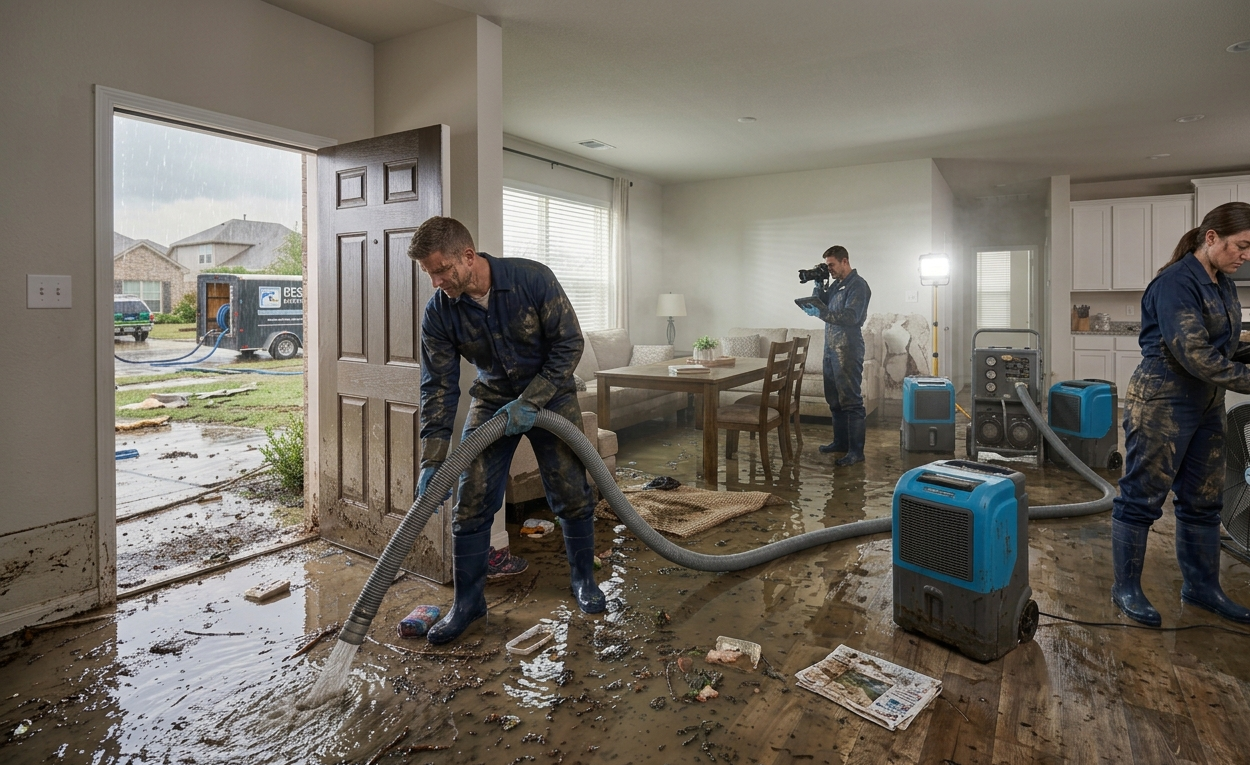
Our Flood Restoration Process
1. We Find Out What Happened
The first step is understanding the source.
Did water come from outside?
Was there a pipe failure?
Did a fixture overflow?
Is the source still active?
The answers affect the entire cleanup plan.
2. We Check Safety and the Affected Area
We look at how many rooms were affected and whether there are concerns involving contamination, electricity, damaged ceilings, flooring, or other building materials.
The visible water line does not always show the full extent of the moisture.
3. We Remove Standing Water
Professional extraction equipment is used to remove accumulated water.
This may include different extraction tools depending on the depth of the water, flooring type, and size of the flooded area.
4. We Remove Debris and Materials When Needed
Flooding can leave behind mud, debris, wet carpet padding, damaged drywall, and other materials that may interfere with cleanup and drying.
We determine what can be dried and what may need to be removed.
5. We Start Structural Drying
Air movers and dehumidifiers are placed according to the affected areas and materials.
The goal is to move moisture out of wet materials and control humidity inside the property.
6. We Check Moisture Levels
A room should not be considered dry simply because the floor no longer looks wet.
Moisture readings help us understand whether walls, floors, framing, ceilings, and other materials are continuing to dry.

Flood Cleanup for Garland Homes
A flooded home can feel overwhelming.
You may be looking at wet flooring, soaked furniture, damaged drywall, personal belongings, and several rooms affected at the same time.
You may also be wondering:
What can be saved?
Does the flooring need to come out?
Is water inside the walls?
Can mold become a problem?
How long will the drying take?
Where should cleanup begin?
Our job is to break the problem into clear steps.
First we identify the source and extent of the water.
Then we remove excess water.
After that, we focus on cleanup, drying, moisture monitoring, and the condition of affected materials.
Why Choose Water Damage Garland Tx for Flood Restoration?
We Are Based in Garland
Water Damage Garland Tx is located at:
2501 W Kingsley Rd, Suite 120
Garland, TX 75041
Our content and restoration approach are built around the actual water damage problems Garland property owners face.
We Start With the Source
Stormwater, a sewage backup, and a burst pipe should not be treated exactly the same way.
We first understand what happened before deciding how the cleanup should proceed.
We Look Beyond Standing Water
Floodwater often moves into areas that cannot be seen from the middle of the room.
We check surrounding materials for moisture before deciding the next step.
We Explain the Process Simply
You should understand what is happening inside your property.
We explain what we find, what needs attention, and what the next step is without making the process unnecessarily complicated.
Homes and Businesses
We provide flood restoration in Garland for residential and commercial properties.
Frequently Asked Questions
Contact Us
Floodwater Inside Your Garland Property?
Do not wait until the visible water disappears and assume the problem is over.
Floodwater can remain underneath flooring, inside walls, around cabinets, and in other building materials long after the main puddles are gone.
Call Water Damage Garland Tx and tell us what happened.
We can help with professional water removal, flood cleanup, drying, moisture inspection, and restoration.
Call (972) 961-2528 for flood damage restoration in Garland TX.