Professional Sewage Backup Cleanup near 75041
Sewage Backup Cleanup in Garland TX
Water coming up through a toilet, floor drain, shower, or other drain is not something you should treat like an ordinary plumbing leak.
If sewage has entered your home or business, keep people and pets away from the affected area and avoid unnecessary contact with the water. Sewage can contain harmful microorganisms and other contaminants, which is why cleanup requires a different approach from a clean water loss. EPA guidance similarly recommends avoiding contact with sewage affected areas and keeping family members and pets away.
Water Damage Garland Tx provides professional sewage cleanup for residential and commercial properties. We focus on removing contaminated water, cleaning affected areas, addressing materials that cannot be safely restored, and drying the remaining structure.
Sewage backing up now? Call (972) 961-2528.
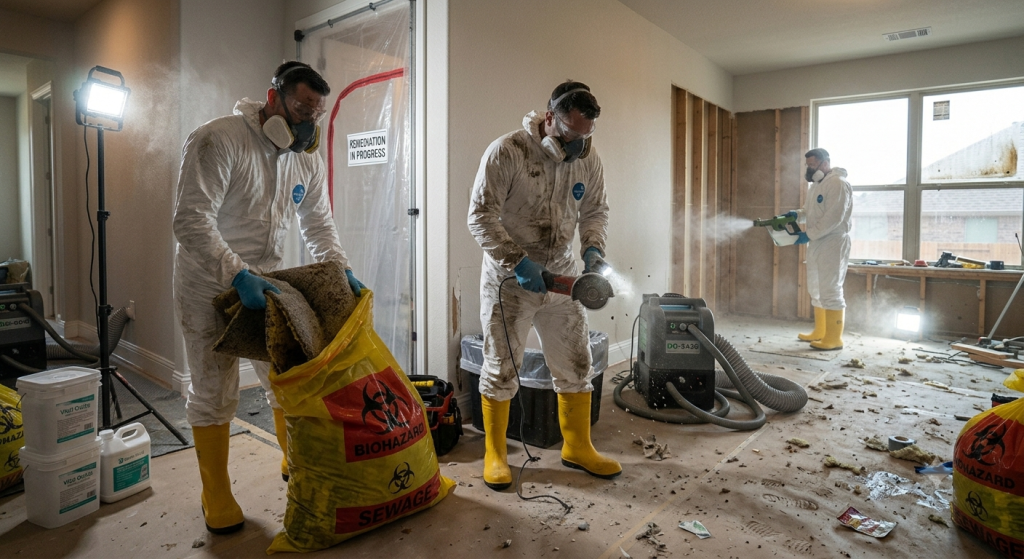
Sewage Coming Up Through a Drain? Start Here
A sewage backup can be confusing because the first thing you see may simply look like dirty water on the floor.
The source makes the difference.
Water from a broken clean water supply line can usually be handled with extraction and drying. Water that has come through a sanitary sewer or contaminated drain requires additional precautions.
If sewage is actively entering the building, stop using toilets, sinks, showers, washing machines, and other fixtures connected to the affected drain line until the source has been checked.
Do not walk through the affected area just to see how deep the water is.
If electrical equipment or outlets may be affected, stay out of the area until it can be safely evaluated.
Then deal with two separate problems:
First, the cause of the sewer backup must be corrected.
Second, the contaminated water and affected property need to be professionally cleaned and restored.
Water Damage Garland Tx handles the property damage and sewage cleanup side of the problem.
Sewage Cleanup Is Different From Regular Water Damage Cleanup
A burst pipe and a sewage backup can both leave water across the floor.
But the cleanup process is not the same.
With a clean water loss, restoration often focuses heavily on extracting water and drying materials that can be saved.
With a sewage backup, contamination must also be considered.
Materials that absorb contaminated water may need to be removed rather than simply dried. Hard surfaces that can remain may require proper cleaning before structural drying begins.
That is why sewage backup cleanup in Garland TX should not be treated as ordinary water extraction.
The goal is not simply to make the floor look dry.
The goal is to address the contaminated water, affected materials, remaining moisture, and the condition of the property.
What Can Cause a Sewage Backup in Garland?
There is no single cause of every sewer backup.
A blockage may be inside the property plumbing, in the building’s sewer lateral, or farther toward the municipal sewer system.
Garland Water Utilities provides a particularly useful local clue through the home’s sanitary sewer cleanout. According to the City, if the cleanout is dry during a sewer stoppage, the blockage is generally under the house. If the cleanout is holding water or overflowing, the stoppage is generally toward the City’s sewer main.
Common causes can include clogged drain lines, grease and debris buildup, damaged sewer piping, tree root intrusion, toilet or drain blockages, and problems farther along the wastewater system.
Garland also has separate sanitary sewer and stormwater systems. Household wastewater travels through the sanitary sewer system to a treatment plant, while rainfall runoff enters the separate storm drainage system.
That distinction matters because not every water problem during a storm is automatically a sanitary sewer backup.
The source needs to be identified before the right cleanup plan can be chosen.
Our Sewage Backup Cleanup Process
1. We Identify the Affected Area
We first determine where the contaminated water entered and how far it has spread.
A backup may begin in a bathroom but move into a hallway, adjoining room, wall base, carpet, or flooring.
Understanding the affected area helps determine what needs to be cleaned, removed, or dried.
2. We Limit the Spread
Contaminated water should not be carried unnecessarily into clean areas.
The affected space is managed so foot traffic, tools, and materials do not spread the problem farther through the property.
Keeping children and pets away from the contaminated area is also important. EPA guidance recommends avoiding contact with sewage and restricting access to affected areas.
3. We Remove Sewage and Standing Water
Once the area can be worked in safely, contaminated standing water is removed using appropriate extraction equipment.
Visible water is only part of the problem.
We also look at surrounding materials to determine where the sewage water may have traveled.
4. We Evaluate Affected Materials
Some materials are easier to clean than others.
Hard, nonabsorbent surfaces may sometimes be cleaned and retained depending on their condition.
Highly absorbent materials that have taken in contaminated water may require removal rather than simply being dried in place.
The decision should be based on the source of the water, type of material, amount of contamination, and condition of the property.
5. We Clean the Remaining Surfaces
Once contaminated water and materials that cannot remain have been addressed, the surfaces that stay are cleaned using methods appropriate for the affected area.
The objective is to address what the sewage touched rather than simply removing visible dirt and odor.
6. We Check for Remaining Moisture
Even after contamination is addressed, moisture may remain in flooring, wall materials, framing, or other parts of the structure.
Moisture meters and other inspection tools can help determine which areas still require drying.
7. We Dry the Structure
Air movement and dehumidification may be used after the affected area has been properly cleaned and prepared for drying.
This is where sewage cleanup begins to connect with normal structural drying.
The property needs to be both properly cleaned and properly dried.
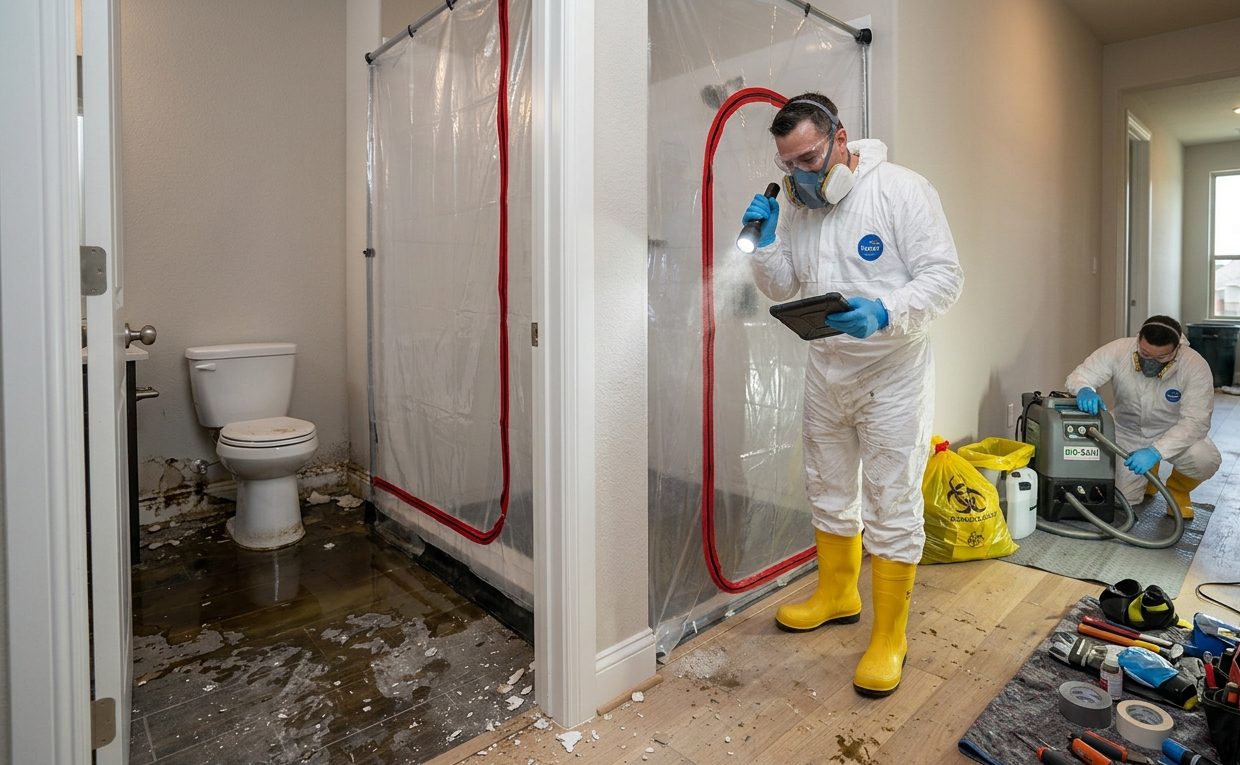
Sewage Backup in a Bathroom
Bathrooms are a common place for sewage and drain backups to become visible.
You may see water rising from a toilet, shower drain, bathtub, or floor drain.
If multiple fixtures are affected at the same time, the problem may involve a larger drain or sewer line rather than a single fixture.
Avoid repeatedly flushing toilets or running additional water to “test” the drain. That can add more wastewater to an already blocked system.
Once the source is addressed, our role is to remove the contaminated water and deal with the affected bathroom and surrounding areas.
Why Choose Water Damage Garland Tx?
Based in Garland
Water Damage Garland Tx is located at:
2501 W Kingsley Rd, Suite 120
Garland, TX 75041
We are writing and building our service around the actual problems Garland property owners face rather than using generic sewer cleanup information with a city name added to it.
Clear Separation Between Cleanup and Plumbing Repair
If you need the sewer line repaired, that is a plumbing issue.
If sewage has entered and contaminated your property, that is restoration work.
We explain the difference instead of pretending one service solves everything.
We Look Beyond the Visible Water
Sewage may travel beneath flooring or into surrounding materials.
The cleanup process should follow the contamination and moisture, not simply the edge of the visible puddle.
Simple Communication
We explain what is affected, what may need to be removed, what can potentially remain, and what happens next in easy language.
Residential and Commercial Cleanup
We provide sewage damage cleanup for Garland homes, rental properties, businesses, and other affected buildings.
Sewage Cleanup Across Garland
Water Damage Garland Tx serves properties throughout Garland, including ZIP Codes 75040, 75041, 75042, 75043, and 75044.
Our Garland service area includes communities such as Firewheel, Centerville, Oakridge, Club Hill, Club Creek, Embree, Rose Hill, and North Garland.
Depending on location and availability, we may also serve nearby communities including Rowlett, Sachse, Richardson, Mesquite, Plano, Wylie, and Rockwall.
Frequently Asked Questions
Contact Us
Sewage Inside Your Garland Property?
Do not treat sewage like an ordinary wet floor.
Keep people and pets away from the affected area, avoid unnecessary contact, and have the source and property damage addressed separately.
Water Damage Garland Tx can help with contaminated water removal, sewage cleanup, moisture inspection, drying, and restoration after a backup.
Call (972) 961-2528 for professional sewage backup cleanup in Garland TX.