Professional Water Extraction near 75041
Water Extraction in Garland TX
Standing water in your home or business does not stay in one place. It can move underneath flooring, soak into carpet and padding, reach drywall, and spread into nearby rooms.
Water Damage Garland Tx provides professional water extraction for homes and businesses affected by burst pipes, appliance leaks, overflowing fixtures, ceiling leaks, sewage problems, and flooding.
We focus first on getting unwanted water out of the property. After extraction, we check for moisture that may remain in floors, walls, ceilings, and other materials so the drying process can begin properly.
Water spreading right now? Call (972) 961-2528.

Need Water Removed From Your Property?
Maybe you woke up to water across the kitchen floor.
Maybe a washing machine hose failed while nobody was home.
Maybe water from an upstairs bathroom is now dripping through the ceiling below.
Or maybe heavy rain has pushed water into part of your property.
Whatever caused it, the first question is usually the same:
How do we get the water out?
Our water removal service is designed for exactly that stage of the problem.
We remove standing water, check where it has traveled, and prepare affected areas for professional drying.
Water Extraction and Water Removal Are Part of the Same Process
Customers often search for both water extraction and water removal service.
For most property water losses, these terms describe the same basic goal: getting unwanted standing water out of the building.
Our extraction process may include:
You do not need a separate company for water removal and another company to start drying.
We handle the process from extraction into the next stage of restoration.
When Do You Need Water Extraction?
Not every wet floor requires a major restoration project.
But professional extraction should be considered when water has spread beyond a small surface area or entered materials that are difficult to dry on your own.
Common situations include:
Burst Pipes
A broken plumbing line can release water quickly into walls, floors, cabinets, and nearby rooms.
Once the source is stopped, removing the released water becomes the immediate priority.
Water Heater Leaks
A failed water heater or supply connection can leave a garage, utility area, closet, or surrounding rooms with significant standing water.
Washing Machine and Dishwasher Leaks
Appliance failures can spread water beneath cabinets, flooring, and nearby walls before the leak is discovered.
Overflowing Toilets, Tubs and Sinks
An overflow can affect more than the room where it began, especially when water reaches hallways or moves through flooring.
Roof and Ceiling Leaks
Water entering from above may soak ceilings, insulation, drywall, and flooring below.
Storm and Flood Water
Garland maintains mapped floodplain areas along Duck Creek, Rowlett Creek, Spring Creek, and their tributaries, and the City operates a stormwater program aimed in part at reducing localized flooding.
When outside water enters a property, the cleanup process may require additional precautions depending on contamination.
What To Do Before Water Extraction Begins
If water is actively entering your property, your first concern should be safety.
Stop the Water Source If It Is Safe
For a plumbing leak, shut off the affected fixture or the main water supply if you know how to do so safely.
If the problem involves the municipal water or sewer system, the City of Garland directs residents to its Water Utilities contact for sanitary sewer and water issues.
Stay Away From Electrical Hazards
Do not walk through standing water if outlets, appliances, extension cords, or electrical equipment may be affected.
Avoid Sewage or Contaminated Floodwater
If water came from a sewer backup or outside flooding, limit contact with it.
Move Valuables Only If Safe
If you can safely move dry belongings away from the affected area, do so.
Do not put yourself at risk trying to save furniture or other items from an unsafe area.
Then call for professional help.

Our Water Extraction Process
1. We Find the Source and Affected Areas
Before simply placing equipment in the room, we need to understand what happened.
Where did the water start?
Is the source already stopped?
How many rooms are affected?
Has water moved underneath flooring or into nearby walls?
These questions help determine the right extraction and drying approach.
2. We Check How Far the Water Has Spread
The visible puddle is not always the full problem.
Water can travel underneath laminate, tile systems, carpet padding, cabinets, baseboards, and drywall.
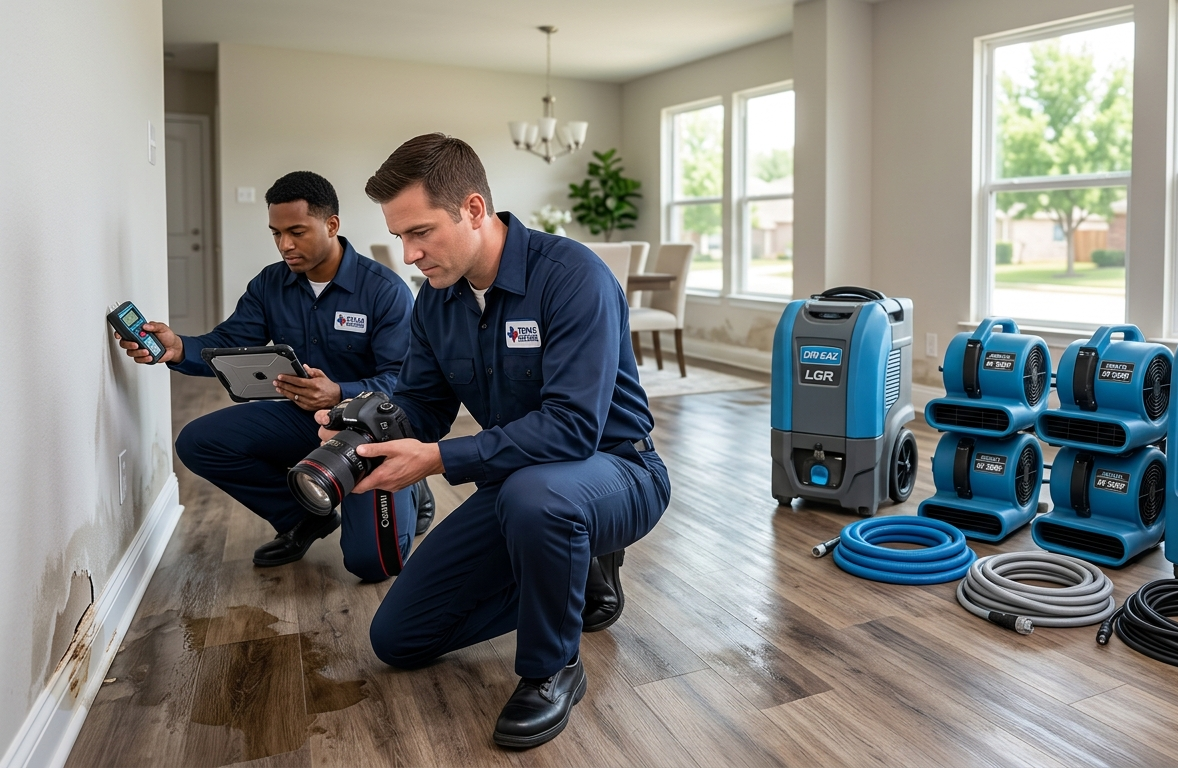
Moisture meters and other inspection tools can help identify areas that may also be wet.
3. We Remove Standing Water
Professional extraction equipment is used to remove accumulated water from affected areas.
The equipment used depends on the amount of water, type of flooring, size of the affected space, and condition of the materials.
This is the main water removal stage.
4. We Check Flooring and Building Materials
After visible water is removed, we check whether moisture remains inside affected materials.
Carpet may feel dry on top while the padding underneath remains wet.
A wall may look normal while the lower drywall has absorbed moisture.
That is why extraction should not stop when the puddles disappear.
5. We Start the Drying Process
Once excess water is removed, air movers and dehumidifiers can be placed where needed.
Water extraction and structural drying work together.
Extraction removes liquid water.
Drying addresses moisture remaining inside materials and the surrounding air.
6. We Monitor Moisture
Drying should be based on conditions inside the property rather than guessing.
Moisture readings can help determine how the affected areas are progressing and whether equipment needs to remain in place.
Water Removal for Garland Homes
Water inside a home can affect normal life very quickly.
A wet bedroom may make the room unusable.
Water underneath kitchen flooring can reach cabinets and nearby walls.
A leaking upstairs bathroom can affect both the upper floor and the ceiling below.
Our residential water removal service helps homeowners get excess water out and determine what needs to be dried next.
We handle water damage from common household problems including:
Frequently Asked Questions
Contact Us
Standing Water in Your Garland Property?
You do not need to guess how far the water has traveled.
Call Water Damage Garland Tx and tell us what happened. We can help determine the appropriate extraction and drying steps for your property.